Tebow CURE Transforming Lives Through Hand Surgery

Many birth defects affect various parts of the body. One of these is congenital hand differences. These are conditions affecting the structure and function of a child’s hands from birth. Among the most common are syndactyly, polydactyly, and macrodactyly. These conditions can vary widely in severity, affecting the child’s mobility and self-esteem. Early evaluation and treatment are often essential to support a child’s development, independence, and overall quality of life.
Syndactyly is the term for webbed or fused fingers. It occurs when the fingers fail to separate during early fetal development. This condition can range from simple cases where fingers are joined only by soft tissue to more severe cases where bones or tendons are also fused. Polydactyly refers to the condition of having extra fingers that can appear on either the hands or feet. Macrodactyly, a rare condition affecting approximately 1 in 100,000 newborns, is characterized by the abnormal enlargement of one or more fingers due to excessive growth of bone, fat, nerve, or soft tissue.
In Philippine folklore, these conditions are regarded as both a blessing and a curse. Having one or more fused fingers can be seen as a blessing from the deities and gods, while having fused fingers may also indicate that the child was born to a mythical nature spirit. Polydactyly is often regarded as a sign of good luck or a supernatural blessing. Some families refuse to treat these hand conditions due to that belief and because they have no severe adverse effects on the child. However, for cases like macrodactyly, which affects finger movement, fine motor skills, and self-esteem, families eagerly seek medical intervention to help improve their child’s quality of life.
Jovans Story

Jovan, seven years old, Mylyn’s second child among the three, was born with macrodactyly in his right thumb and index finger. “I saw my newborn baby’s right finger was larger than usual. His index finger was the size of my thumb. I was shocked and worried,” Mylyn, Jovan’s mother, recalled. “They would call him ‘dakog kamot’ (big hands) at school and laugh at him. What’s even worse is that other parents would bully him as well. I could hear them question him as if they were disgusted by my son’s hand,” Mylyn shared with her voice in pain. Deeply concerned, Mylyn brought him to a doctor. After a thorough assessment, they were told that the only way to stop the abnormal growth was through amputation. However, the cost of surgery was overwhelming for their family. Mylyn’s husband worked as a manual laborer and was the family’s breadwinner.
Over the years, his fingers continued to grow, and he began to experience pain at night. “He would wake me up at night and ask me to massage his index finger,” Mylyn shared. Jovan’s right hand also had limited function. He couldn’t pinch, and his enlarged index finger made it difficult to use both hands for simple tasks, such as eating. But more painful than the physical limitations was the emotional pain. Jovan would often come home from school crying after being bullied by classmates. In public places, strangers would look at him with disgust. “I asked God, ‘’Why my son? Why our family?’ We are poor. He should have given this condition to someone from a wealthy family who could afford the surgery,” Mylyn said, holding back tears.

After six long years of prayer and waiting, hope finally arrived! God answered their prayers when the Tebow CURE team traveled sixteen hours to conduct a mobile clinic in their hometown. Even more incredibly, because of the partnership between Tebow CURE and their local government, Jovan and Mylyn were provided transportation to the Tebow CURE Children’s Hospital.
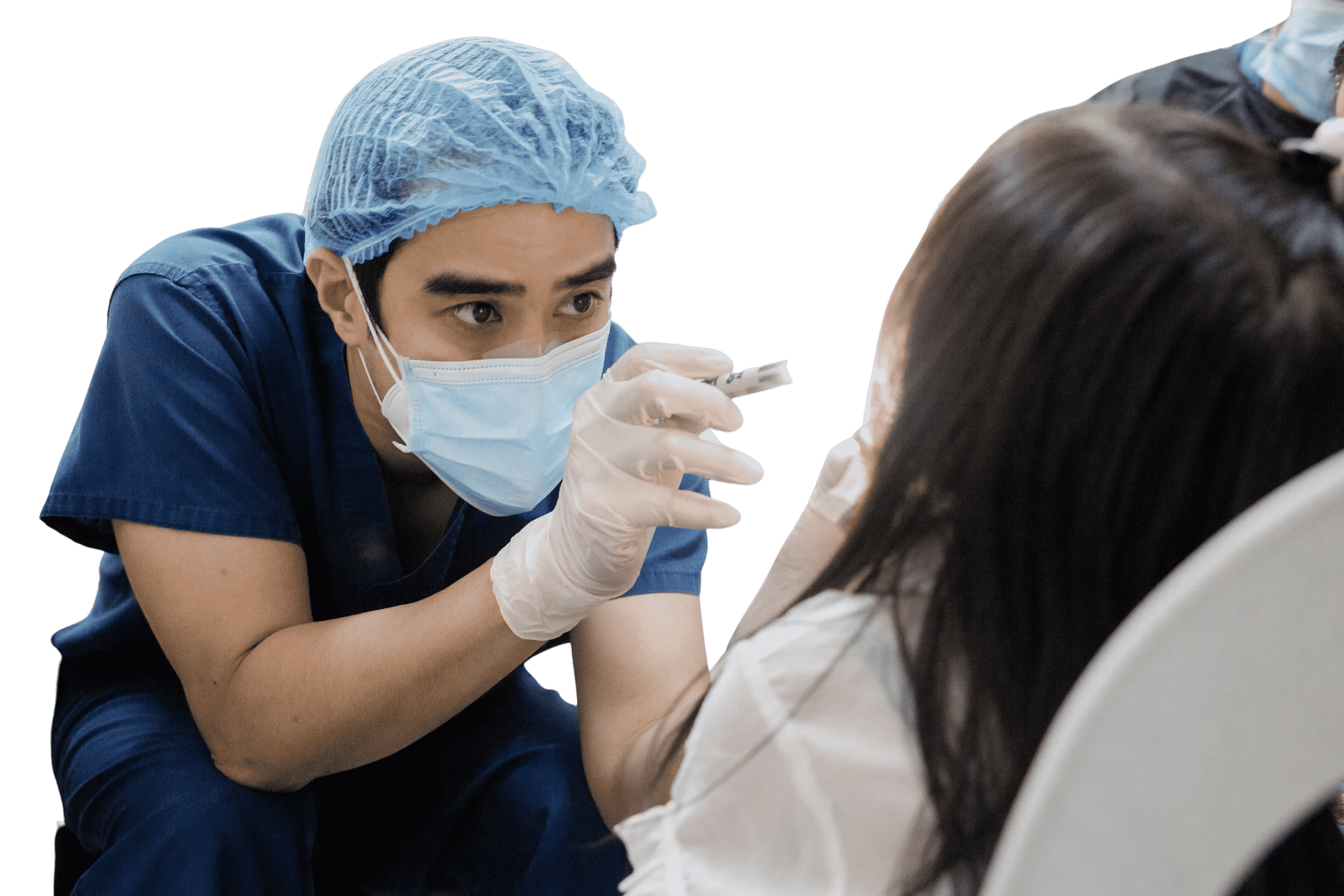
Upon arriving at Tebow CURE, Dr. Patrick Manalaysay, the hospital’s new hand specialist, assessed Jovan’s case and explained to Mylyn that the only option was to amputate Jovan’s index finger and reduce the mass in his thumb, as his thumb is functional. In June of this year, Jovan underwent his corrective surgery, feeling both excited and scared. Jovan’s surgery was successful! Dr. Patrick made a cut on the back of Jovan’s hand over the bone of the index finger, carefully separated and removed fat, muscle, nerves, and blood vessels, and then cut the bone at the base to remove his entire index finger. Then, the extra fat between Jovan’s fingers and near his thumb was trimmed and closed up in layers.

“Treating Macrodactyly or any hand deformity is individualized, for not every case is treated the same, and as much as we would like to improve how it looks, we would like the patient’s hand to be functional more than anything else. This is why it is important to have more hand surgeons so we can provide the best options for our patients,” Dr. Patrick shared.
Today, Jovan can use his right hand with greater ease and confidence. He now carries a renewed sense of self-worth—free from the fear of ridicule that once followed him everywhere. For Mylyn, seeing her son smile without shame is nothing short of a miracle.
Jovan’s story is a powerful reminder that with compassion and skilled medical care, children born with differences can have a future filled with hope and possibility. You, too, can help more children by partnering with us in our mission of helping kids heal!